Summary
- Zilisch discussed the Phoenix readings on SiriusXM NASCAR Radio on October 21, according to On3.
- He favored driver safety but warned against losing the dogleg's racing value.
- NASCAR has previously used mouthpiece data to guide changes at Watkins Glen; that does not confirm a Phoenix decision.
The driver's account
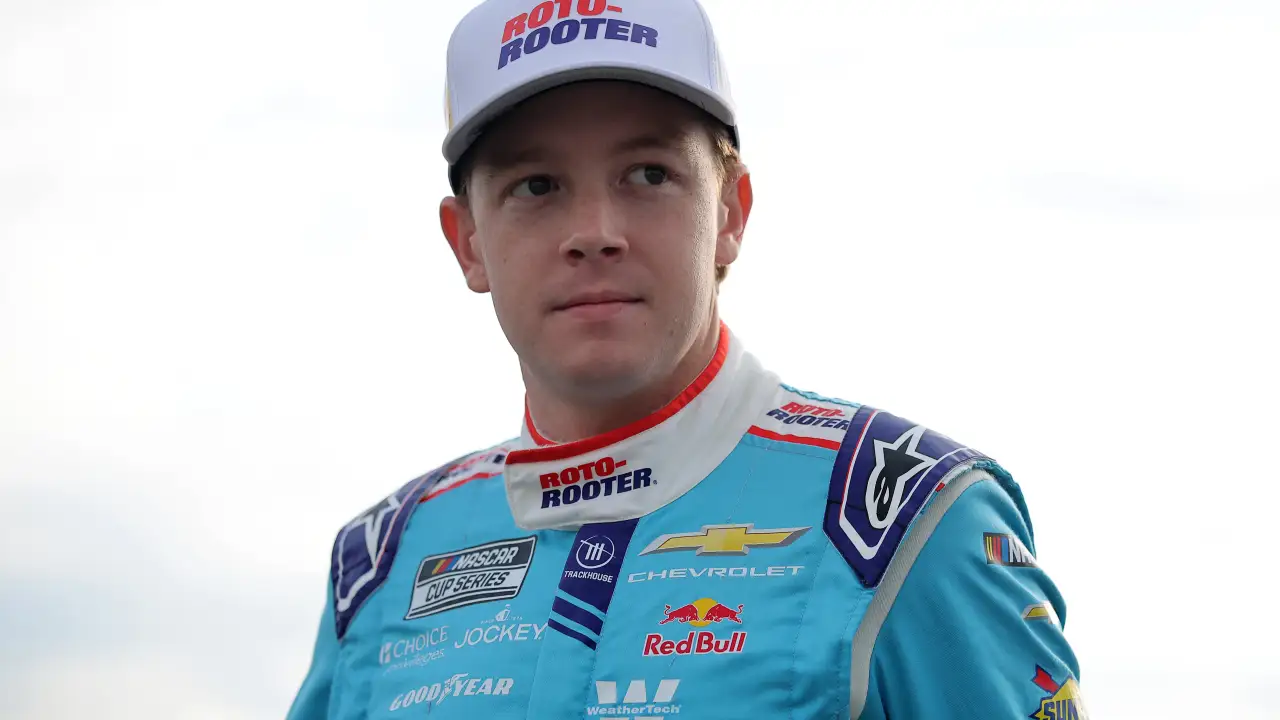
Connor Zilisch says the transition through Phoenix Raceway's dogleg repeatedly produced readings of about 10G on the sensor in his mouthpiece. The Trackhouse Racing driver discussed the data on SiriusXM NASCAR Radio on Wednesday, October 21, after the Cup Series raced at Phoenix, On3 reported. He described the hits as uncomfortable while acknowledging that the shortcut is part of how drivers compete at the track. [4]
His comments are a driver's account of his recorded experience, not a newly published NASCAR analysis of the entire field. The reports do not provide the underlying Phoenix dataset, the duration of individual events or a medical finding about Zilisch. The reported readings should therefore not be presented as proof of an injury or as identical measurements for every driver and every lap. [1] [2]
Safety versus a distinctive racing line
The dogleg sits on Phoenix's frontstretch. Drivers can cut across the flatter apron and then climb back onto the banked racing surface. MotorBiscuit described that transition as the focus of Zilisch's concerns. He said he was conflicted about changing a feature that makes Phoenix distinctive and creates passing opportunities, while recognizing that driver safety must guide the decision. [2]
On3 reported discussion of several possibilities, including turf, restricting access with a double-yellow-line rule or smoothing the transition. Zilisch mentioned turf as an option but said he hoped changes would not diminish the racing. Those ideas are not the same as an adopted rule or construction plan. The sources cited here do not establish that NASCAR or Phoenix has announced a specific redesign. [1]
What the sensors have changed before
NASCAR explained the technology in a September 2024 report: a Wake Forest University School of Medicine research team developed custom mouthpieces to measure drivers' head motion and impacts. Drivers can review their own data, while research use is anonymized. The device collects information for safety analysis; NASCAR's safety-engineering leader emphasized that wearing the sensor does not itself make a driver safer at that moment. [3]
That official account described a precedent at Watkins Glen. Data from the 2023 race showed a large concentration of recorded events in the Bus Stop, prompting review with drivers and changes to the curbing for 2024. It demonstrates how measurements and feedback can inform track work. It does not establish that the same solution is appropriate at Phoenix or that a Phoenix change has been approved. For now, the confirmed news is Zilisch's reported concern and his preference to retain the dogleg's racing value while improving safety. [3] [1]
Reporting sources
- On3 · Connor Zilisch reveals physical toll of Phoenix dogleg, weighs potential changes ↗2026-10-21
- MotorBiscuit · Should Phoenix Change Its Dogleg? Connor Zilisch Weighs In ↗2026-10-22
- NASCAR · How mouthpiece data, driver feedback led to safety enhancements at Watkins Glen ↗2024-09-10
- Heavy · NASCAR Faces Tough Decision After Connor Zilisch Reveals Painful 10G Hits at Phoenix ↗2026-10-22
This article follows our editorial standards. To report an error, see our corrections policy.