Summary
- The three restart projects could produce 2.25 gigawatts, enough for roughly two million homes and businesses.
- Federal lending commitments total as much as $4.4 billion.
- Microsoft and Google have long-term agreements tied to the Pennsylvania and Iowa projects.
An unprecedented restart effort
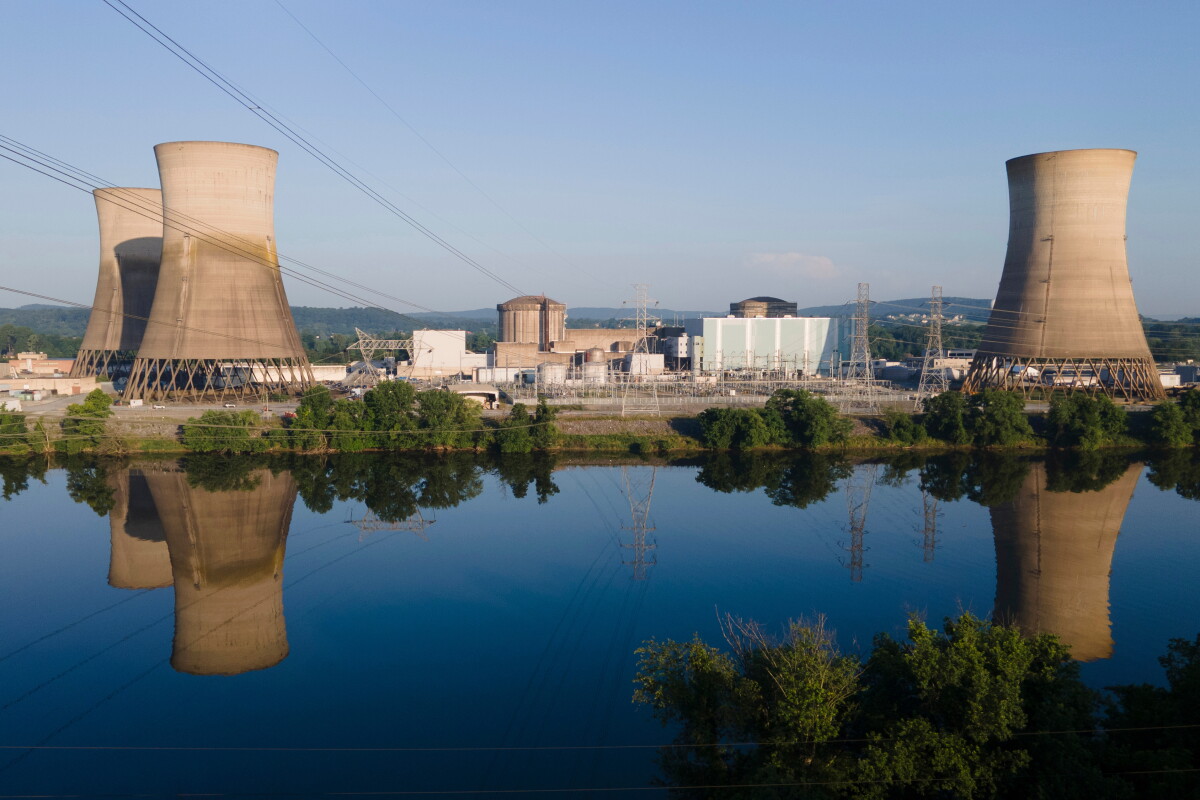
The United States is attempting to return three closed commercial nuclear plants to service as electricity demand rises, particularly from large data centers. The projects involve Palisades in Michigan, the Crane Clean Energy Center in Pennsylvania and the Duane Arnold Energy Center in Iowa. Together they could restore about 2.25 gigawatts of generating capacity. [1] [2]
No US commercial reactor is known to have resumed operation after formally entering the decommissioning process, making the projects a test of whether existing nuclear infrastructure can be recovered safely and economically. Federal lending commitments of as much as $4.4 billion are supporting the three efforts. [1]
Palisades is furthest along
Holtec's Palisades project is targeting service by March 2027. Workers began loading nuclear fuel in August but paused after a fuel assembly tilted from its upright position, prompting the company to investigate. The incident illustrates why a restart requires more than reversing a closure decision: equipment, staffing, fuel handling and licensing must meet current standards. [1] [2]
If Palisades returns, it would become the first US plant known to restart after entering decommissioning. Supporters say that would preserve a large source of steady carbon-free power. Critics argue that aging components, public financing and unresolved waste obligations require close scrutiny rather than an accelerated schedule. [1] [2]
Big Tech is underwriting two projects
Microsoft has a 20-year agreement connected to the Crane Clean Energy Center, the former Three Mile Island Unit 1. Google has a 25-year power agreement supporting NextEra Energy's planned restart of Duane Arnold, which is targeted for early 2029. The technology companies want large amounts of round-the-clock electricity for cloud and AI computing. [1] [2]
Those contracts change the economics that helped close the plants. A data-center customer can commit to buying power for decades at prices that justify repairs and relicensing. Supporters say that structure keeps costs away from residential customers, while skeptics want regulators to ensure that grid upgrades and project risks are not shifted back to the public. [1] [2]
The larger energy trade-off
Restarting an existing reactor can be faster than building a new large nuclear plant, but it is not immediate. Nuclear Regulatory Commission approvals, component testing, workforce rebuilding and local emergency planning remain necessary. The projects also compete with renewable generation, batteries, gas plants and transmission upgrades for capital. [1] [2]
The three restarts will show whether closed reactors can become a repeatable response to data-center demand or remain exceptional projects tied to specific sites and corporate contracts. Their value will depend on safe operation, actual completion dates and whether the electricity reaches the grid without creating unexpected costs for other customers. [1] [2]
Reporting sources
- Associated Press · US is reviving shuttered nuclear plants to meet growing electricity demand ↗October 16, 2026
- World Nuclear Association · United States of America: World Nuclear Outlook ↗October 2026
- US Department of Energy · Nuclear reactor deployment in the United States ↗Accessed October 18, 2026
This article follows our editorial standards. To report an error, see our corrections policy.