Summary
- U.S. stocks rebounded on Oct. 26 after a volatile week in which the Nasdaq 100 fell 5.5%, its steepest weekly decline since April 2025, according to Reuters and AP reporting.
- Investors are debating whether massive AI infrastructure spending can earn sufficient returns and how much of it will depend on debt or complex financing arrangements.
- The IMF has identified AI-linked financing and rising borrowing costs as financial-stability risks, but it has not declared that an AI bubble exists or is certain to burst.
- The search trend’s timing overlaps with market volatility and upcoming technology earnings, but the trend data alone cannot establish what caused individual searches.
A rebound after a bruising week
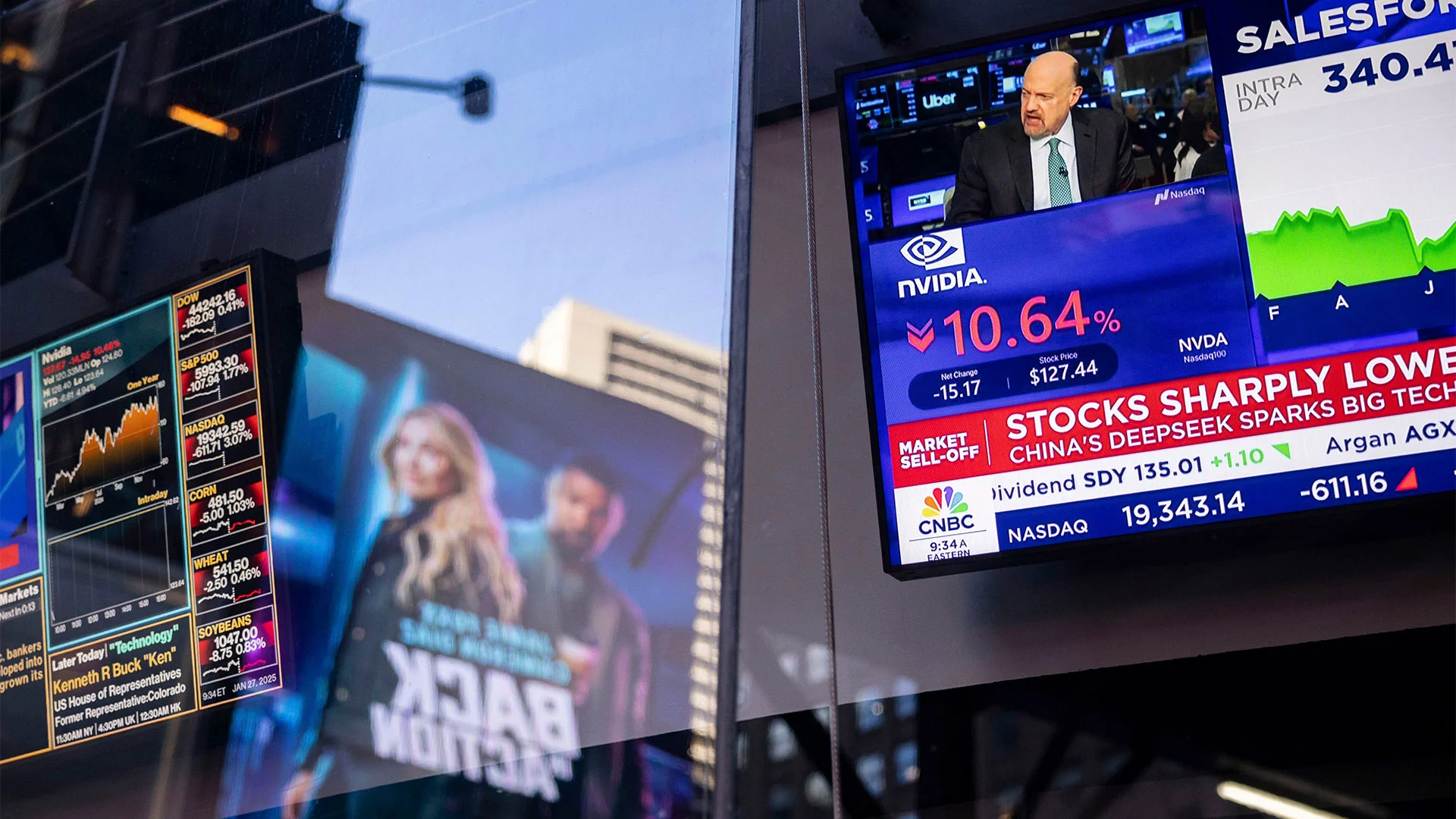
The phrase “AI bubble” drew renewed attention as U.S. markets swung between a selloff and a rebound. On Monday, Oct. 26, the S&P 500 rose 0.8%, the Nasdaq Composite gained 1.1% and the Dow added 0.3%, even as artificial-intelligence-linked shares remained volatile, The Associated Press reported. The day’s gains followed a sharp technology retreat the prior week. [1]
Reuters reported that the Nasdaq 100 fell 5.5% last week, its steepest weekly decline since April 2025, while AI investment concerns contributed to losses across technology shares. The index fell after investors questioned whether the sector’s large spending commitments would generate returns commensurate with their cost. That concern is different from evidence that AI demand or the technology itself has collapsed. [2]
The timing is consistent with renewed public interest in the bubble debate, but Google Trends figures do not disclose why any person searched for the phrase. The market developments provide context, not proof of a single cause for the search increase. [1] [2]
The financing question behind AI spending
One focus is how companies will fund the data centers, chips and power infrastructure needed to build and run AI systems. Meta’s announcement of a large share offering to finance AI expansion became one example under investor scrutiny: AP reported Monday that the company planned to raise $35 billion through a stock sale, with chipmakers potentially investing up to $5 billion. Such transactions can raise questions about financial links between AI suppliers and their customers, though the announcement alone does not demonstrate improper financing or unsustainable demand. [1]
The International Monetary Fund’s October 2026 Global Financial Stability Report examines potential risks from interconnected AI-sector financing. In a related IMF analysis, staff reviewed 14 arrangements since 2023 involving about $300 billion in equity investment and $650 billion in debt in exchange for $1.4 trillion of future-revenue commitments. The IMF warned that stress at important recipients could lower revenue expectations and weaken the value of associated debt; it framed this as a vulnerability, not a forecast that a collapse will happen. [3] [4]
Rates and earnings are the next tests
Borrowing costs matter because infrastructure projects require heavy upfront investment and may take years to produce cash flow. AP reported the U.S. 10-year Treasury yield eased to 4.98% on Monday and that markets broadly expected the Federal Reserve to hold rates steady at its Wednesday decision. A higher-for-longer rate environment can make debt-funded construction and future earnings less attractive, while a change in yields can move valuations even when a company’s operating results have not changed. [1]
Investors are also looking for evidence that the spending is translating into revenue and productivity. AP said Alphabet, Microsoft and Amazon were due to report earnings during the week, making their disclosures on capital spending, demand and returns a near-term test for the AI trade. The bubble label remains contested: market prices and financing risks can signal fragility, but determining whether valuations are excessive requires judging future profits that are not yet known. [1] [3]
Reporting sources
- The Associated Press · US stocks climb amid shaky trading in markets worldwide ↗2026-10-26
- Reuters · Trend hedge funds saw worst week since 2024 as AI stocks fell, Goldman says ↗2026-10-26
- International Monetary Fund · Global Financial Stability Report: Resilience, Risk, and Transformation ↗2026-10-13
- International Monetary Fund · Global Financial Markets Face Rising Risks From AI, Bond Yields, and Cyberattacks ↗2026-10-13
This article follows our editorial standards. To report an error, see our corrections policy.