Summary
- A September Bazaarvoice survey found 57% of respondents named authentic reviews and star ratings as the strongest reason to trust an AI product recommendation.
- A separate Feedvisor survey of 1,006 U.S. consumers found 55% had used AI to research or compare products, while 5% bought immediately after an AI recommendation.
- Bluefish analyzed 237,804 AI citation instances across 23,592 brand and ecommerce URLs, but its dataset covered specific platforms, dates and consumer-goods categories.
AI can start a shopping journey without finishing it
Generative AI is becoming one more place for consumers to discover and compare products, but recent survey results suggest that a recommendation is often a prompt to investigate, not an automatic checkout. In an August 2026 survey of 1,006 U.S. consumers conducted with Zogby Analytics, ecommerce software provider Feedvisor found that 55% had used AI to research or compare products in the prior six months. Only 5% said they would buy immediately when an AI recommends a product, while 62% said they would never let an AI agent order and pay on their behalf. [1]
Digiday reported on Oct. 23 that another Feedvisor survey found 16% of shoppers start product searches in ChatGPT, but 9% go there to buy. The same report cited PartnerCentric research showing that, after an AI suggestion, 33% of surveyed shoppers checked existing reviews, 22.3% compared prices and 18.8% searched Amazon or another retailer. These figures come from different surveys and should not be combined as if they describe one sample. [2] [3]
Reviews are a trust signal, not just search content
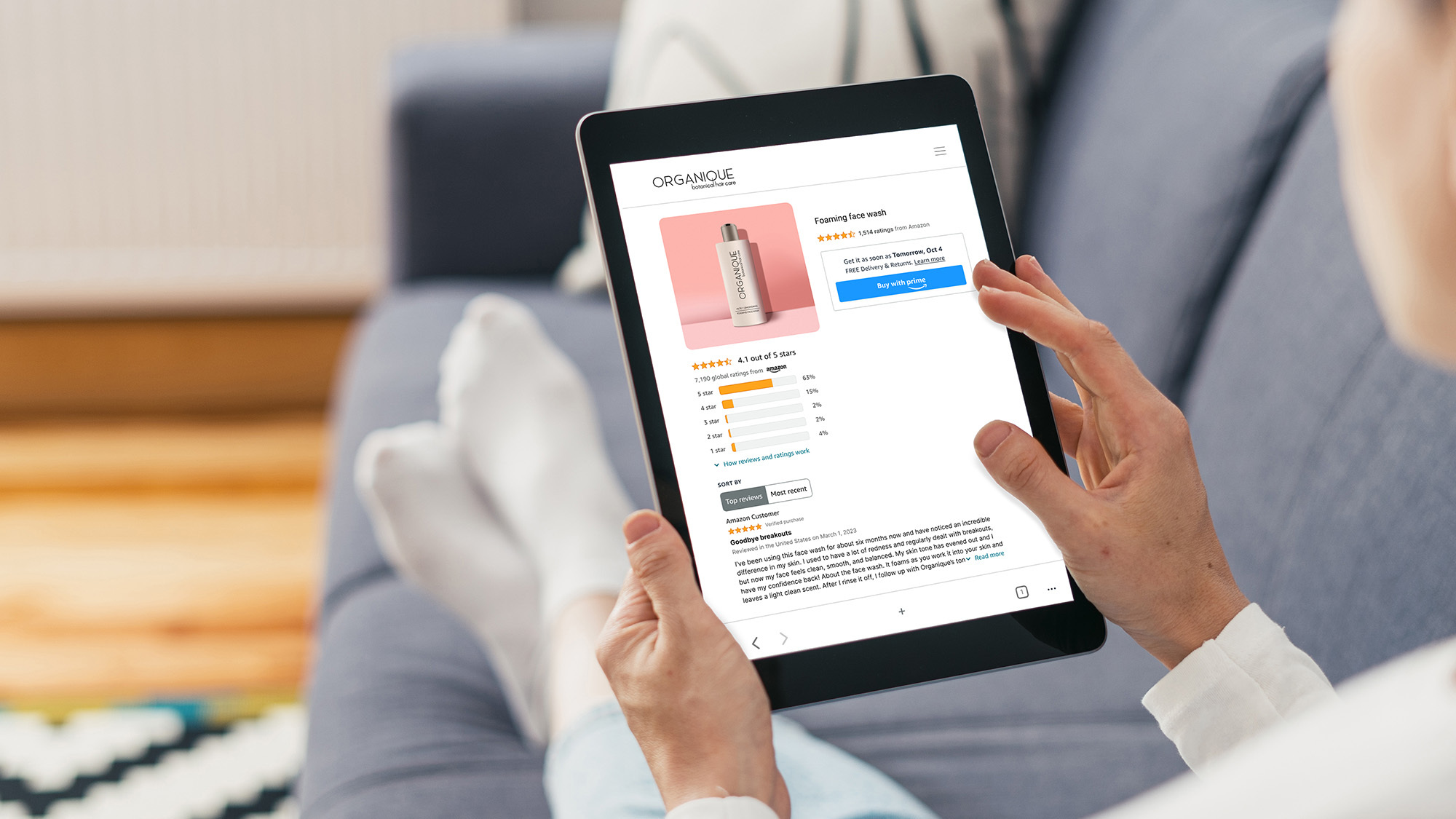
A joint study released by Bazaarvoice and AI marketing platform Bluefish on Sept. 17 found that 57% of surveyed consumers identified authentic reviews and star ratings as the factor that most increased their trust in an AI product recommendation. Another 57% said it was very important to know an AI tool had based its recommendation on real customer reviews and photos, while 33% called that somewhat important. Bazaarvoice said 62% reported more trust in AI recommendations than six months earlier. [4]
The survey results require context. Bazaarvoice combined two studies it conducted: a February 2026 survey of more than 1,300 U.S. adults and a September survey of more than 1,700 adults across the United States, Asia-Pacific and Europe, the Middle East and Africa. Respondents were screened for active AI use. Bazaarvoice sells review and user-generated-content services, so its findings are useful industry evidence but not an independent academic study or a representative measure of every shopper. [4]
What the platform data can and cannot show
Bluefish’s separate analysis examined AI citations from Sept. 1 to 7 across ChatGPT Web, Google AI Overviews and Perplexity. It covered 23,592 unique brand and ecommerce URLs and 237,804 citation instances in consumer-goods categories including apparel, snacks, beverages and toys. Bazaarvoice said 59% of AI-cited product pages in the dataset had at least 100 reviews, 92% had ratings of four stars or higher, and 65% displayed a review summary near the top. The data describes pages that AI systems cited; it does not prove that review volume caused a recommendation or sale. [4]
For U.S. ecommerce and marketing teams, the practical implication is to treat AI visibility and purchase confidence as connected but distinct tasks. Accurate product details can help a system understand an item, while current reviews, transparent pricing, seller reputation, shipping and return information give shoppers ways to test a recommendation. The surveys do not establish that reviews always determine a purchase, nor that every AI channel behaves the same way. They do indicate that brands should measure whether AI referrals lead to comparison, review-reading and completed orders, rather than counting mentions alone. [1] [2] [4]
Reporting sources
- Feedvisor · The 2026 E-commerce Consumer Behavior Report ↗2026
- Digiday · AI boosts discovery but reviews still seal the deal, new research shows ↗2026-10-23
- Business Wire / PartnerCentric · Shoppers Who Trust AI Are 6x More Likely to Trust Creators, New PartnerCentric Research Finds ↗2026-08-12
- Bazaarvoice · Bazaarvoice and Bluefish team up as new research shows 9 in 10 shoppers want real reviews behind AI product recommendations ↗2026-09-17
This article follows our editorial standards. To report an error, see our corrections policy.