Summary
- CBS News reported Thursday that Gen. Randy George warned in late December 2025 that Army missile defense munitions were critically short.
- According to officials cited by CBS, George projected that Patriot PAC-3 and THAAD interceptor stocks would remain strategically low until 2030.
- Pentagon spokesman Sean Parnell rejected the reporting, and George declined to comment.
- Defense Secretary Pete Hegseth removed George as Army chief of staff in April, while the Iran war was underway.
What was reported
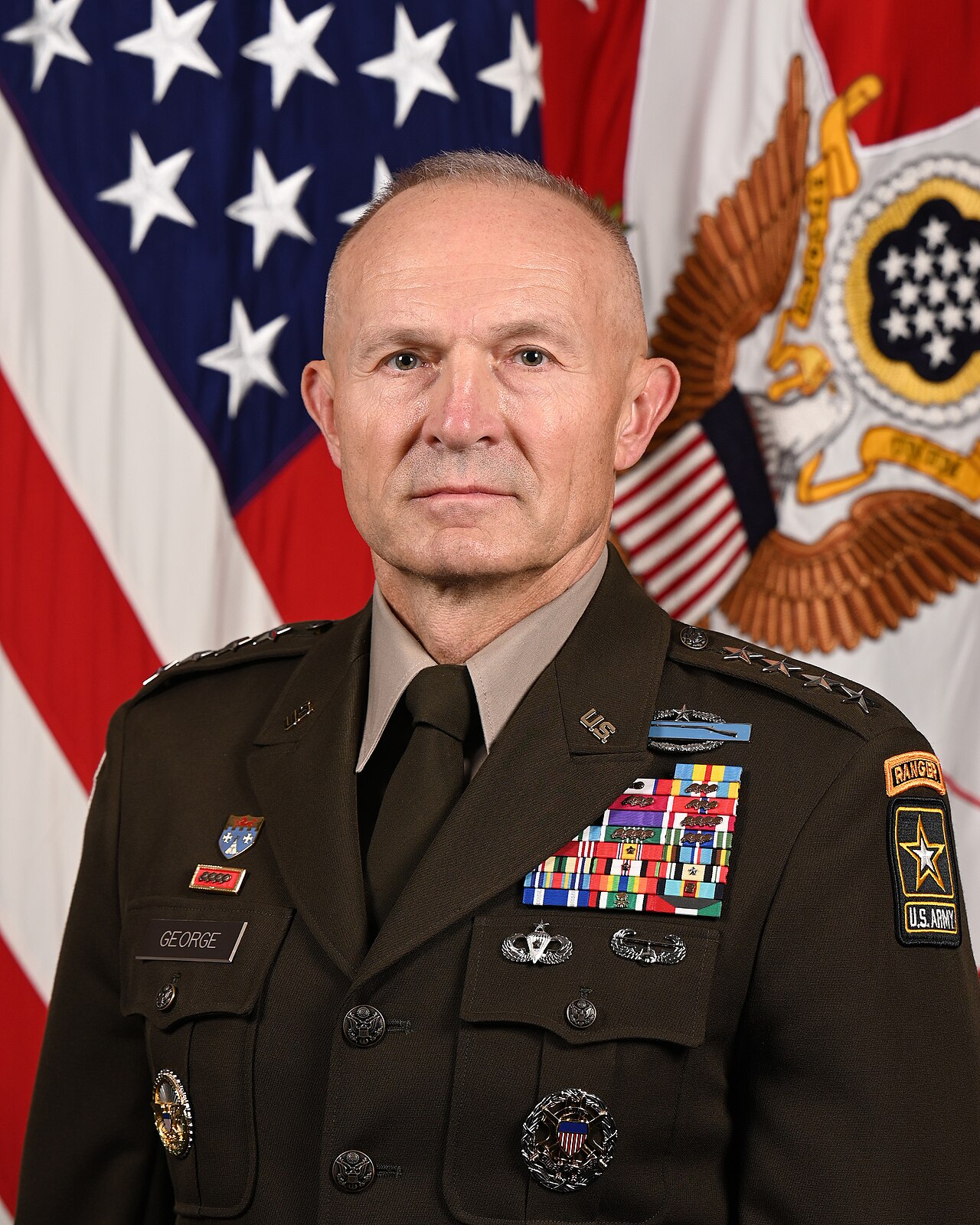
Gen. Randy George, the former Army chief of staff, warned two months before the U.S. war with Iran began that his service was critically short of missile defense interceptors and would stay that way for about five years, CBS News reported on Thursday, Oct. 15, citing multiple U.S. officials familiar with the matter. [1]
According to the officials, George's risk assessment was written in late December 2025 for the Pentagon's Global Force Management Allocation Plan for fiscal year 2027. That plan is the annual order, approved by the defense secretary, that sets where troops and key weapons are assigned around the world. CBS said the warning centered on interceptors for Terminal High Altitude Area Defense (THAAD) batteries and on Patriot PAC-3 missiles, which the officials said would remain at strategically low levels until 2030. [1]
The officials linked the shortfall to Patriot transfers to Ukraine after Russia's 2022 invasion, interceptors fired in defense of Israel and limited capacity in the defense industrial base, CBS reported. The network said it withheld the exact percentage figures it was given because of security concerns. George declined to comment. [1]
Pentagon response
Pentagon chief spokesman Sean Parnell disputed the reporting. "Claims of U.S. munitions shortages are false," he told CBS, adding that the military retains what it needs to strike when and where the president chooses and that operations have continued across multiple combatant commands. [1]
Stockpile estimates
CBS cited estimates from the Center for Strategic and International Studies that the U.S. began 2026 with roughly 2,300 Patriot interceptors and fired between 1,050 and 1,430 of them in the Iran conflict, up to 61% of the prewar inventory. For THAAD, CSIS put the prewar stockpile at about 355 interceptors, with 190 to 290 used, and said no replacement deliveries were expected in fiscal 2026. [1]
Production is slow to catch up. CSIS estimated that new THAAD interceptor contracts take about four years and five months to deliver, and Patriot PAC-3 orders about three and a half years, according to CBS. Lockheed Martin said in January it plans to raise THAAD output from 96 to 400 interceptors a year. Mark Cancian, a senior adviser at CSIS, told CBS that air and missile defense munitions would be the Army's most heavily used weapons in any conflict with China. [1]
The CBS report follows a Pentagon inspector general report in September which found that munitions spent in the Iran war had produced strategic inventory shortfalls and exposed industrial base bottlenecks in resupply, Anadolu Agency reported. [4]
George's removal
Hegseth forced George out on April 2, 2026, about five weeks after the Iran war began on Feb. 28. Parnell said at the time that George was retiring as the 41st chief of staff of the Army effective immediately, NBC News and CBS News reported. Two other Army generals were removed the same day, NBC reported. [2] [3]
George had held the post since September 2023 and previously served as senior military assistant to Defense Secretary Lloyd Austin. Officials told NBC that the firing stemmed partly from Hegseth's long-running friction with Army leadership and with Army Secretary Dan Driscoll, an ally of George, and that George had been expected to serve until late summer 2027. [3]
What is not known
CBS did not publish the underlying assessment or the exact stockpile percentages, and the details rest on anonymous officials. It is not publicly known how Pentagon leaders responded to George's warning before the war, or whether it played any part in his removal. CBS did not report a connection between the two. With the Iran war now in its seventh month, one official told CBS that even with no further use, restoring Patriot and THAAD stocks to their already-low December 2025 levels would take until 2030. [1]
Reporting sources
- CBS News · Ousted general warned of years-long missile defense shortage before Iran war ↗2026-10-15T20:28:00.000Z
- CBS News · Hegseth ousts Army Chief of Staff Gen. Randy George ↗2026-04-02T20:04:00.000Z
- NBC News · Pete Hegseth forces out Army's top officer and two other generals ↗2026-04-02T21:48:43.000Z
- Anadolu Agency · Iran war exposed 'strategic' US munitions shortfalls: Pentagon watchdog ↗2026-09-15T06:36:54.000Z
This article follows our editorial standards. To report an error, see our corrections policy.